• Home
  • About Us
    • Our Team
    • Google Classroom
    • Contact
    • Club Merch
    • Past Execs
  • Activities
    • Ongoing initiatives >
      • Paper Recycling
      • Recycling Station
      • Native Plant Garden
      • Energy Ambassadors
      • Community Cleanups
      • Food Forest >
        • Seed Sale >
          • Seed catalogue
    • Previous Events >
      • BC Green Games
      • Nanaimo Climate Action Hub
      • Earth Month 2021
      • Bike To School Week
  • Home
  • About Us
    • Our Team
    • Google Classroom
    • Contact
    • Club Merch
    • Past Execs
  • Activities
    • Ongoing initiatives >
      • Paper Recycling
      • Recycling Station
      • Native Plant Garden
      • Energy Ambassadors
      • Community Cleanups
      • Food Forest >
        • Seed Sale >
          • Seed catalogue
    • Previous Events >
      • BC Green Games
      • Nanaimo Climate Action Hub
      • Earth Month 2021
      • Bike To School Week
DOVER BAY ECO CLUB
  • Home
  • About Us
    • Our Team
    • Google Classroom
    • Contact
    • Club Merch
    • Past Execs
  • Activities
    • Ongoing initiatives >
      • Paper Recycling
      • Recycling Station
      • Native Plant Garden
      • Energy Ambassadors
      • Community Cleanups
      • Food Forest >
        • Seed Sale >
          • Seed catalogue
    • Previous Events >
      • BC Green Games
      • Nanaimo Climate Action Hub
      • Earth Month 2021
      • Bike To School Week

Borage


Picture
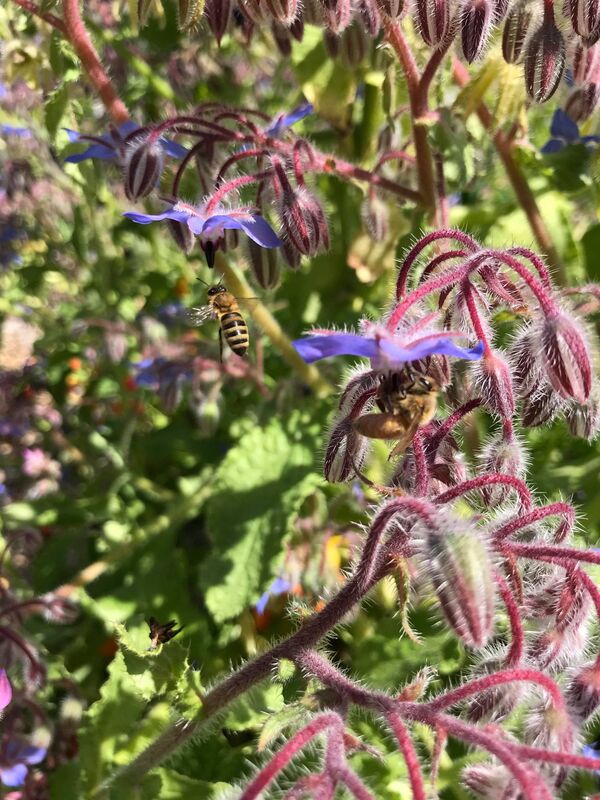
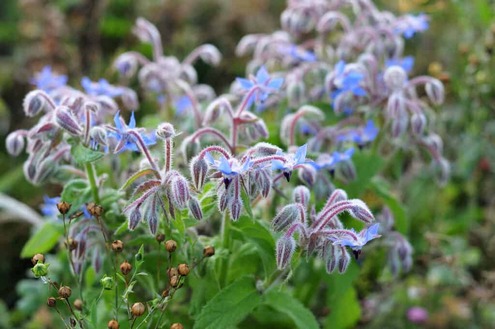
Borage has large, fuzzy, cucumber-scented leaves and vivid blue flowers that attract bees all summer. It is primarily grown to attract bees, but its flowers are edible, and its young leaves can be cooked like spinach or used in salads.


​Borage can grow to 100 cm (39”) tall and is famously good at self-sowing. Directly sow 1 cm deep in April to May, and keep thinned to 60 cm apart.

Timing: Direct sow in April and May and because Borage develops a tender taproot, it doesn't transplant well. To germinate, the soil temperature should be 21°C(70°F), and the seeds should sprout in 5-15 days. 

Sowing: Sow seeds 1 cm deep, and thin  to 60 cm(24) apart. Borage tends to get large and fill in between plants. 

Growing: Borage grows best in full sun with well drained soil, and flower heads need to be picked regularly to prevent self-sowing. 

Harvesting: Pick fresh flowers for freezing or drying for bouquets and cut the fresh leaves during the summer to add to salads or spreads. 

Borage is a great companion plant as they are helpful when planted with strawberries and tomatoes. They are very attractive to pollinators, and are awesome for soil and compost. Fun Fact: Borage is "deer-proof"!​
Picture
Powered by Create your own unique website with customizable templates.