
Chinook Organic Leeks
|
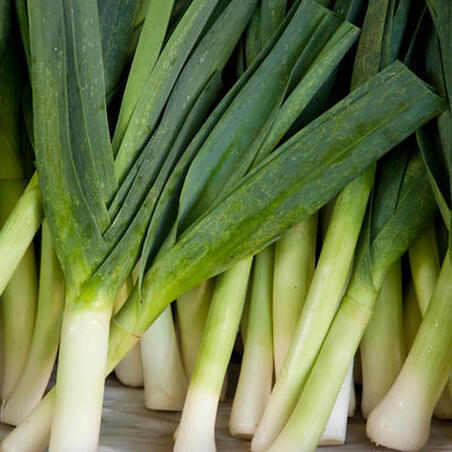
Chinook Leeks are certified organic, and can thrive even in cool spring temperatures. They grow evenly, quickly and upright, and have shanks that can be easily cleaned on the field. These leeks have vibrant green tops, and have outstanding flavour. Leeks can be started inside and transplanted later. Avoid planting near beans and peas, but should be planted near carrots, beets, celery, onions and spinach.
|
|
Timing: From March to mid-June, start winter harvest leeks inside. Start seedlings in a humus-rich nursery bed outside in mild winter areas, and then transplant. The optimal temperature should be 10-25°C (50-75°F).In around 10-16 days, seeds should sprout.
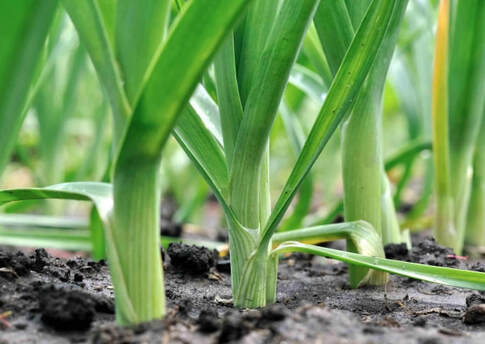
Growing: Leeks have very short roots, so plant in fertile soil with lots of compost and ½ cup balanced organic fertilizer worked in. It is recommended by traditional gardening to make holes 15cm (6″) deep using a dibber, then transplant, setting the plant at the bottom. The hole should be left unfilled, as the rain will fill it as the plant grows. Also, hill the soil up at the base if wanting to blanch further up the stem, or mulch with straw. Mulch around leeks as high up the stems as possible in late fall, and if the weather is below -10°, cover with blanket or tarp. Sowing: Plant seeds in flats (in trays) around 5mm (¼”) deep and about 1cm (½”) apart. When plants reach 20cm (8″) in height, transplant, and space them 20cm (8″) apart but in rows 45cm (18″) apart.If planting in raised beds, rows could be as narrow as 20 cm (8”). Harvesting: Dig up at any size as needed, and if winter harvest leeks are frozen solid, wait until they thaw out to harvest. |
|
