
Nasturtium
|
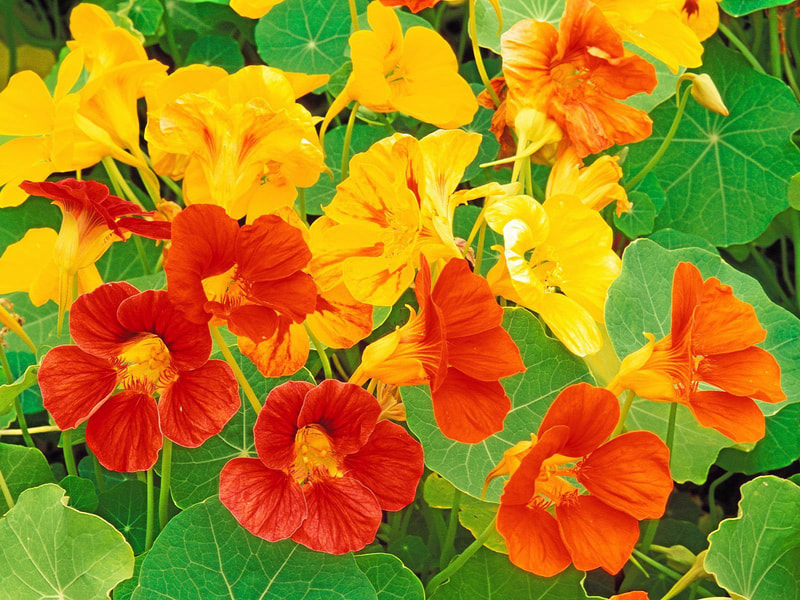
This annual flower bolsters their colorful orange and yellow flowers high above the foliage. This mix of spurless flowers includes tangerine, soft salmon, deep gold, deep mahogany, bright scarlet, cream, and cherry-rose. Most of these flowers can be torn and scattered into salads for an exquisite look and a light pepper taste. They do not need to be fertilized and thrive in poor to average, slightly acidic, well-drained soil.
They also make a good trap for aphids, deter whiteflies, cucumber beetles, and attract predatory insects! |
|
Timing: Sow indoors 2-4 weeks before last frost(in peat or coir pots), or more preferably, direct sow from 1 week after last frost to late May. For germination, the soil temperature would be 12-18°C(55-65°F), and the seeds would start to sprout in about 7-12 days(probably take longer if outdoors).
Sowing: To start, sow seeds 5 mm - 1 cm deep(1/4 - 1/2″), and space smaller varieties 15-30 cm(6-12″) apart while big ones(like Tall Single) should be spaced 60-90 cm(24-36″) apart. Growing: These flowers generally thrive in "poor to average, slightly acidic, well-drained soil". When plants are grown in full sun, consider placing rocks around the plant to prevent its roots from being too hot. In partial shade, plants usually have more large leaves, and has a 'sprawling habit'. During dry weather, continuously water, but do not fertilize. If by any chance aphids infest your plants, cut off the infested tip and destroy it, or a quick 'jet' of water should knock loose and kill the aphids. Nasturtiums make a great companion plant for brassicas, cucumbers, melons, radishes, and tomatoes, and is also an exceptional trap plant for aphids. They also avert insects like whiteflies and cucumber beetles. |
|
